ACEs and long-term effects
Adverse Childhood Experiences (ACEs) are regarded as traumatic events occurring in childhood, such as experiencing violence, abuse, neglect, instability due to parental separation, growing up in a household with substance abuse and or mental health problems (U.S. Centers for Disease Control and Prevention, 2025). Annually, Michigan’s Health and Human Services Department conducts the Michigan Behavioral Risk Factor Survey (MiBRFS), which tracks eight specific ACEs, and research shows that the higher the number of ACEs a person experiences, the more likely they are to take part in risky health behaviors and experience chronic disease and health conditions.
ACEs are common among Michigan residents of all ages, and in 2019, 68% or nearly seven out of 10 adults — reported having one or more ACEs, while 20%, or one in five, have experienced 4 or more ACEs in their childhood (Tian & McKane, 2021). In 2019, 15% of Lenawee County adults surveyed were estimated to have experienced four or more ACEs (Bradley, Brugger, & Nagle, 2019). Additionally, 53% of adults in Lenawee County reported having experienced some form of abuse in their childhood (Tian & McKane, 2021). In 2019, six in 10 youth in Michigan reported having one or more ACEs (Michigan Department of Health and Human Services, 2019). Reported ACEs among Lenawee County high school students are visualized in Figure 15.
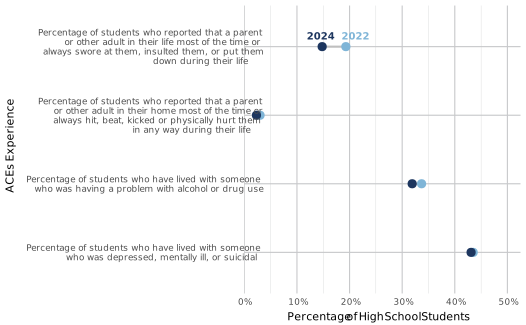
Figure 15. Reported ACEs among high school students in Lenawee County, 2022 and 2024
Resources
- Bradley, J., Brugger, C., & Nagle, F. (2019). Building a trauma-informed Lenawee. https://www.lcmha.org/providermeeting/building_a_trauma_informed_lenawee2019.pdf
- Michigan Department of Health and Human Services. (2019). Adverse Childhood Experiences Among Youth in Michigan Infographic. Michigan Department of Health and Human Services. https://www.michigan.gov/mdhhs/-/media/Project/Websites/mdhhs/Adult-and-Childrens-Services/Children-and-Families/Trauma_Toxic-Stress/Building-Trauma-Informed-MI/Prevalence-of-TTS-in-MI/PDFs/ACEs_MI_Youth_Infographic-2019.pdf?rev=3ef647ad184940a9971c20e6cc506db4
- Michigan Department of Education. (2022–2024). Michigan Profile for Healthy Youth (MiPHY). Michigan Department of Education. https://www.michigan.gov/mde/services/health-safety/miphy
- Tian, Y., & McKane, P. (2021). Health risk behaviors within the state of Michigan: 2019 Behavioral Risk Factor Survey (33rd annual report). Michigan Department of Health and Human Services, Lifecourse Epidemiology and Genomics Division.
- U.S. Centers for Disease Control and Prevention. (2025, January 31). About adverse childhood experiences. Adverse Childhood Experiences (ACEs). https://www.cdc.gov/aces/about/index.html
- Explore additional data points and resources